UK Casino Bonus Terms and Wagering Requirements
 Available in US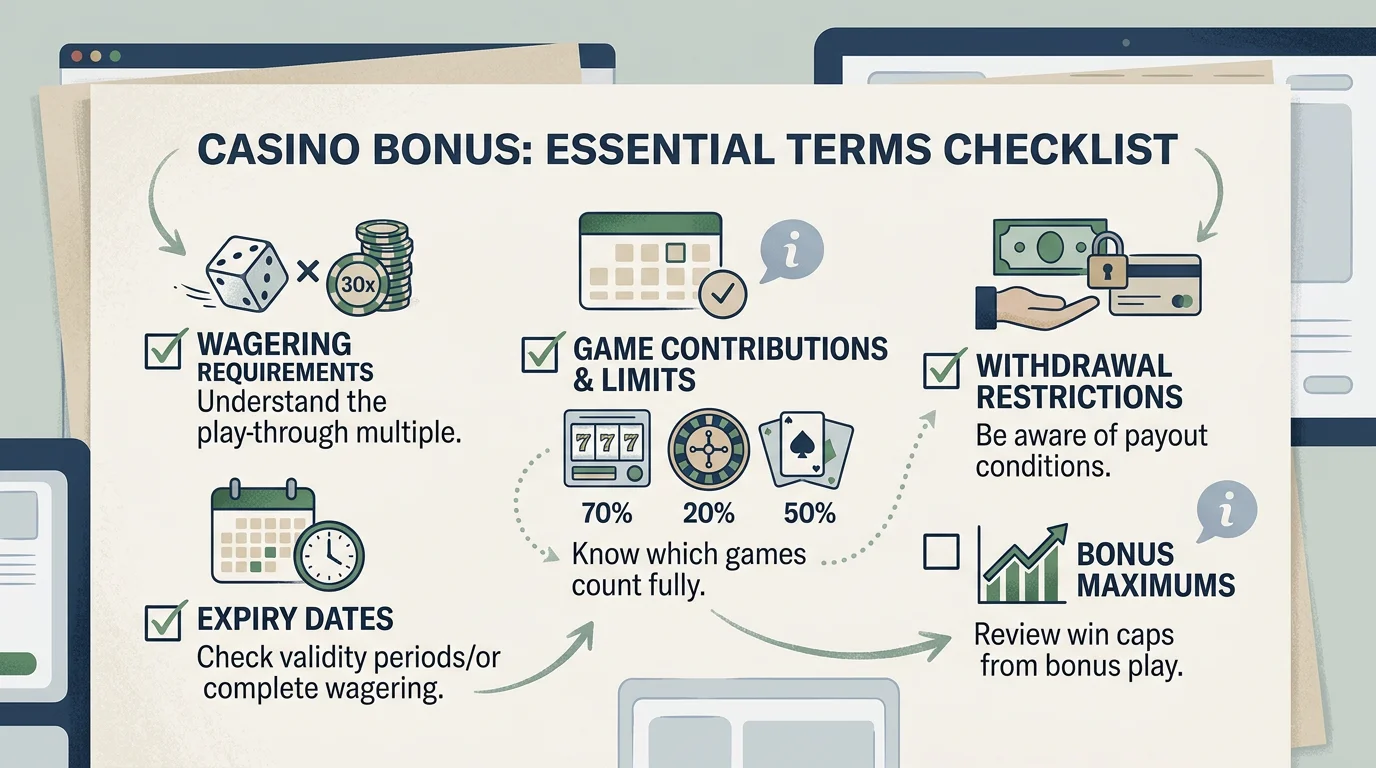
Evaluating UK Casino Bonus Terms and Wagering Rules
Promotion pages are designed to feel quick. They may highlight a deposit match, free spins, cashback wording or a limited-time message. The important detail is usually in the significant terms and full terms. Those terms explain who can take the offer, what deposit is required, which games count, how wagering works, when the offer expires, and what can stop a withdrawal.
The Advertising Standards Authority and CAP rules require gambling marketing communications to be socially responsible, and guidance around gambling promotions expects significant conditions to be clear rather than hidden. The practical point is simple: if the essential condition changes the value of the offer, it should not be buried or hard to understand.
This guide does not name a best offer or say which bonus is best. That would require current operator-specific terms and would encourage a headline comparison that can miss the real risks. A smaller-looking offer with clear terms may be easier to understand than a larger-looking one with restrictions that make withdrawal unlikely.
Two 2026 promotion changes to recognise
The Gambling Commission’s promotion changes that came into force from 19 January 2026 include a ban on mixed-product promotional offers and a cap of ten on bonus wagering requirements. The mixed-product point matters because a promotion should not push customers across different forms of gambling in a way that makes the offer harder to assess. The wagering cap matters because very high wagering demands can make an offer look larger than its practical value.
A cap does not make every bonus good. It simply sets a boundary for licensed businesses under the rules. You still need to check the amount, the games, the expiry date, the maximum bet, the withdrawal rules and the balance separation. A bonus can comply with a headline rule and still be a poor fit for your situation.
Be especially cautious with language that suggests urgency or rescue: “last chance”, “risk-free”, “recover your losses”, “guaranteed win” or “boost your balance today”. Some of those phrases may be misleading or socially irresponsible depending on the context. More importantly, they can push you to act before reading the terms.
Plain terms table
| Term to check | What it means | Why it matters |
|---|---|---|
| Wagering requirement | How many times bonus money, winnings or another stated amount must be played before withdrawal. | It can turn a large headline offer into a much harder task. |
| Expiry | The time limit for claiming, using or completing the promotion. | A short limit can pressure rushed play. |
| Maximum bet | The largest stake allowed while using the promotion. | Breaking the term may affect winnings or withdrawal eligibility. |
| Game or product limits | Which games count, which are excluded and whether contribution rates differ. | Some games may not help you meet the requirement. |
| Withdrawal limits | Any maximum cashout, pending-period wording or document-related condition. | The headline bonus may not reflect what can actually be withdrawn. |
| Deposit and bonus balance | Whether cash deposit balance is shown separately from bonus balance. | Licensed-operator guidance expects separation, and the distinction helps prevent confusion. |
| Marketing opt-in | Whether accepting the offer changes product or channel marketing preferences. | Remote licensees must provide direct marketing opt-in preferences by product and channel. |
Deposit balance should not disappear into the bonus
Bonus wording often becomes risky when cash deposit balance and bonus balance are blurred. Licensed-operator guidance says players must be told they can withdraw deposit balance at any time, including when a bonus is pending or active, subject to regulatory obligations. It also expects bonus and deposit balances to be displayed separately. That does not mean every bonus withdrawal will be simple, but it gives you an important reading tool.
Before opting in, look for the account logic. Does the site explain what happens to your deposit if you cancel the bonus? Does it show which balance is subject to wagering? Does it tell you whether deposit winnings are treated differently from bonus winnings? Can you find the withdrawal rules without clicking through several promotional pages?
If the offer uses unclear labels, stop and read the payment guide before depositing. A bonus should not make it harder to understand your own money. If you already have a dispute about a bonus balance or withdrawal, move to the complaint route instead of adding more money in the hope of fixing the problem through further play.
Red-flag promotion wording
- “No risk” or “risk-free” without a clear explanation of the conditions.
- “Win back losses” or similar language aimed at someone already under pressure.
- A large headline amount with essential limits placed only in hard-to-find terms.
- Vague withdrawal wording such as “subject to checks” without a clear account process.
- Mixed messages about whether the offer applies to casino, betting or other gambling products.
- Marketing sign-up boxes that are pre-ticked or unclear about product and channel choices.
A red flag does not always mean the same thing in every case, but it does mean the offer needs more scrutiny than the headline suggests. The best response to unclear terms is not to take the offer quickly. It is to step back, read the official licence context, and decide whether the promotion is worth engaging with at all.
How to decide whether to ignore an offer
- Check the business on the official register before trusting the promotion.
- Read the significant terms before the full headline amount.
- Find the wagering requirement, expiry, game limits and maximum-bet rule.
- Check whether deposit balance and bonus balance are shown separately.
- Look for withdrawal limits and complaint-route wording.
- Ask whether the promotion is encouraging you to chase losses or gamble while under money pressure.
If any answer feels unclear, ignoring the offer is a valid decision. You do not need to accept a bonus to use an account, and you do not need a promotion to make gambling safer. Promotions can increase complexity, especially when the account already involves identity checks, withdrawal questions or self-exclusion concerns.
Marketing choices matter too
Promotion pages often lead into direct marketing. Remote licensees must provide opt-in preferences by product and channel and must not send marketing that goes against those preferences. In plain terms, you should be able to make genuine choices about what kind of gambling marketing you receive and how it reaches you.
If marketing messages make it harder to keep gambling under control, use preference settings, account limits and blocking tools rather than chasing the next offer. If you are self-excluded or trying to stop, promotional messages can be a trigger. The self-exclusion and support guide is a safer next page than another bonus page.
What this page does not do
This page does not tell you where to find the biggest bonus, which casino has the best offer, or whether a particular promotion is good value. Those claims would need current, brand-specific checking and could still miss the personal risk of gambling more than intended. The useful skill is learning how to spot the terms that change the meaning of the headline.
For money movement, read payments, withdrawals and customer-fund checks. For a bonus disagreement or delayed withdrawal, use the complaint and dispute route. For licence checks, start with the Gambling Commission register guide.
Created by the "Casino not on Gamstop" editorial team.