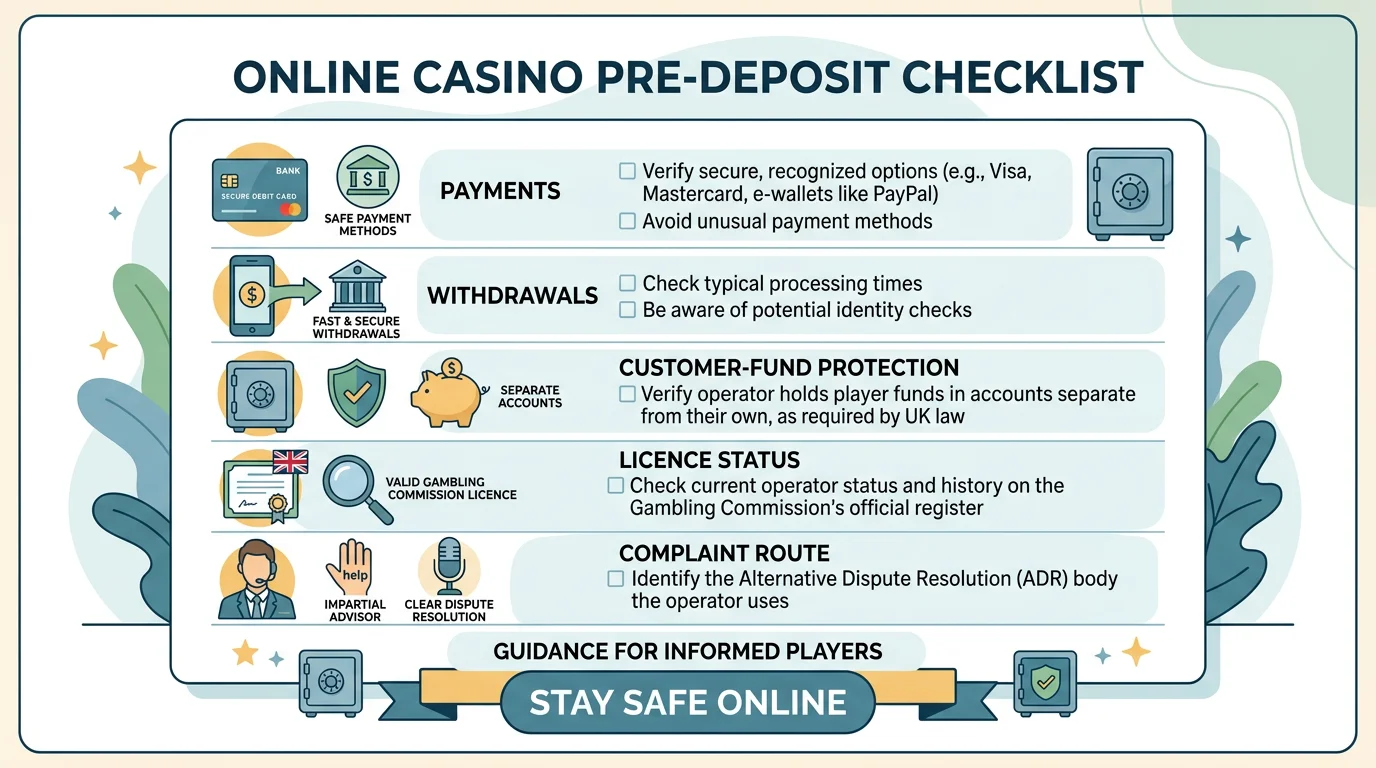
- Payments, withdrawals and customer funds
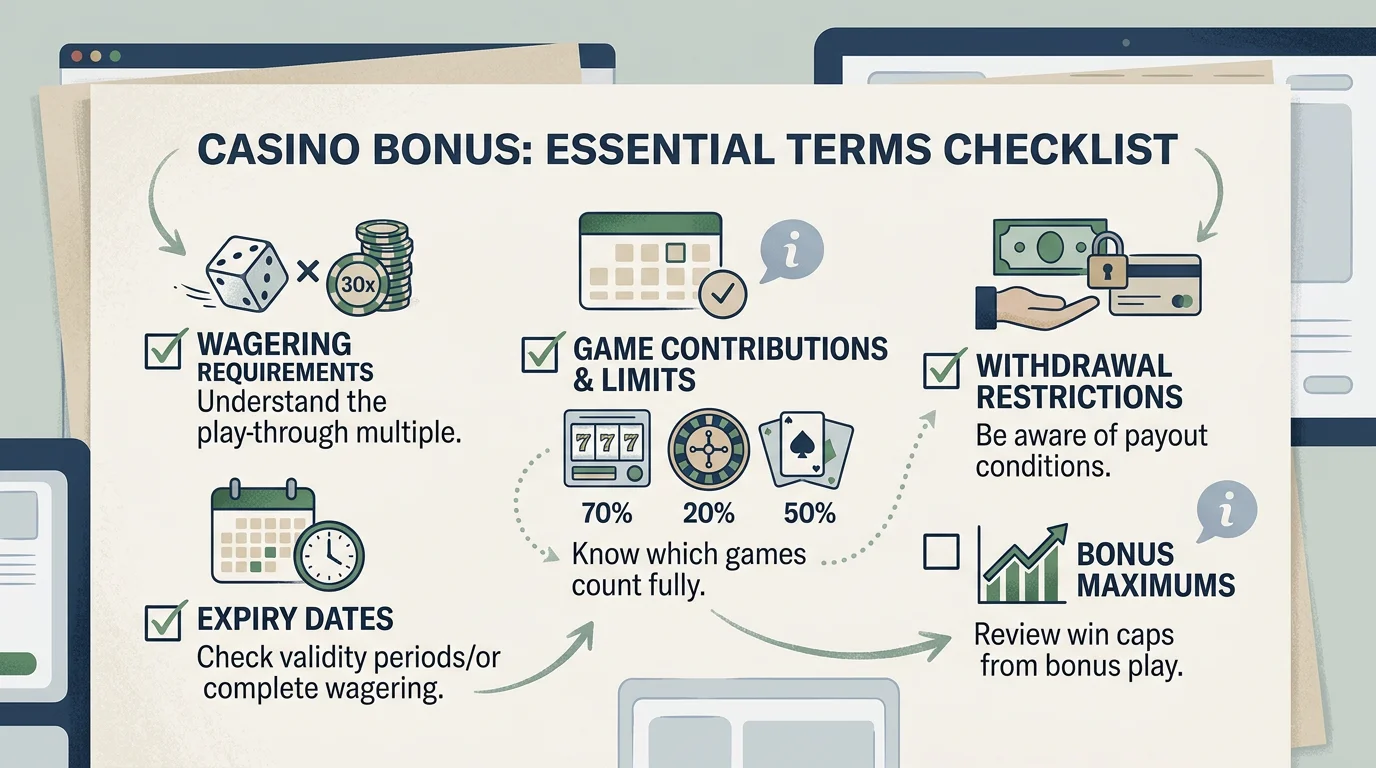
- How to read bonus terms
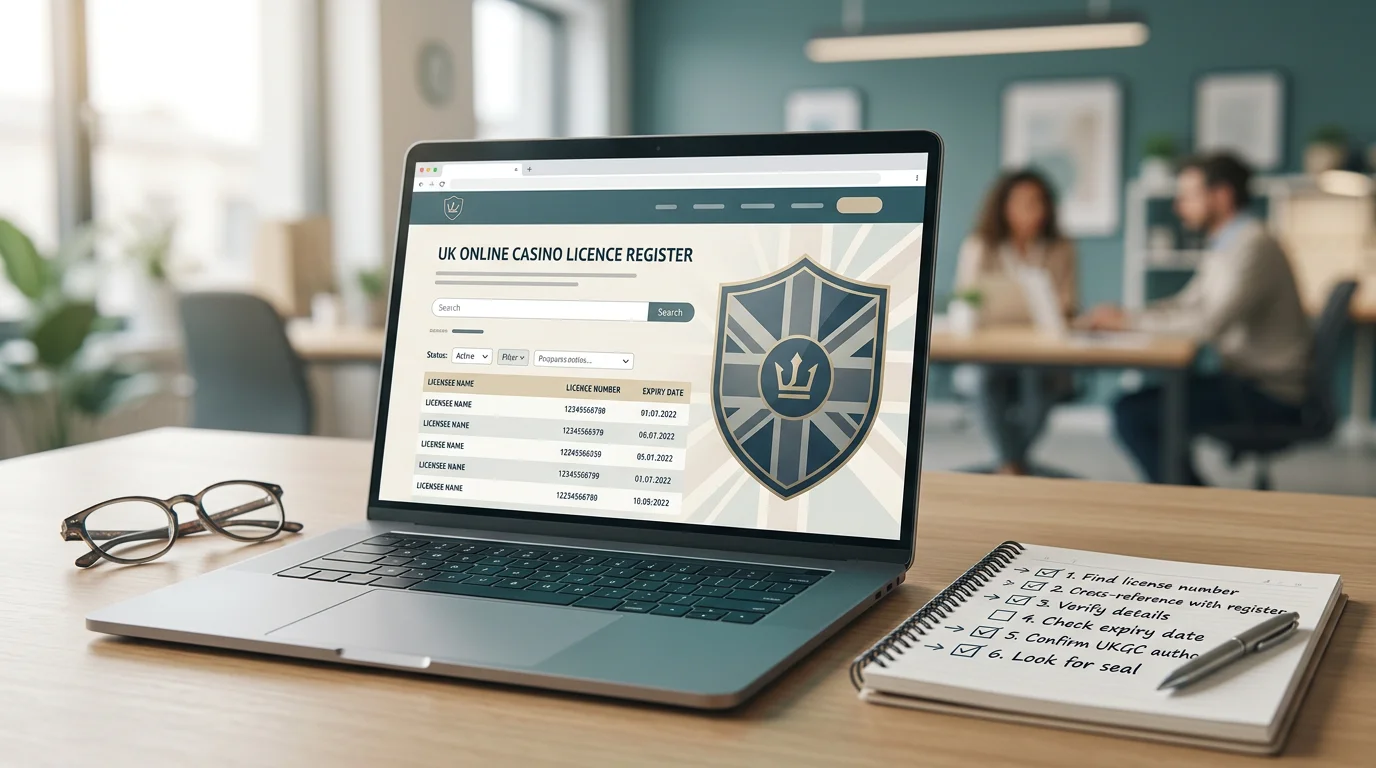
- Check licence information
- Data, privacy and marketing checks
UK Casino Complaints and Fast Withdrawal Dispute Resolution
 Available in US
Table of Contents
- Documenting UK Casino Withdrawal Disputes and ADR Limits
- Know what the official route can and cannot do
- A safe complaint timeline
- Evidence that is usually worth keeping
- When the dispute is about ID or withdrawal checks
- What not to put in the complaint
- If the complaint involves bonus terms
- When to check licence status again
- If stress, debt or chasing losses is part of the problem
- The practical next step
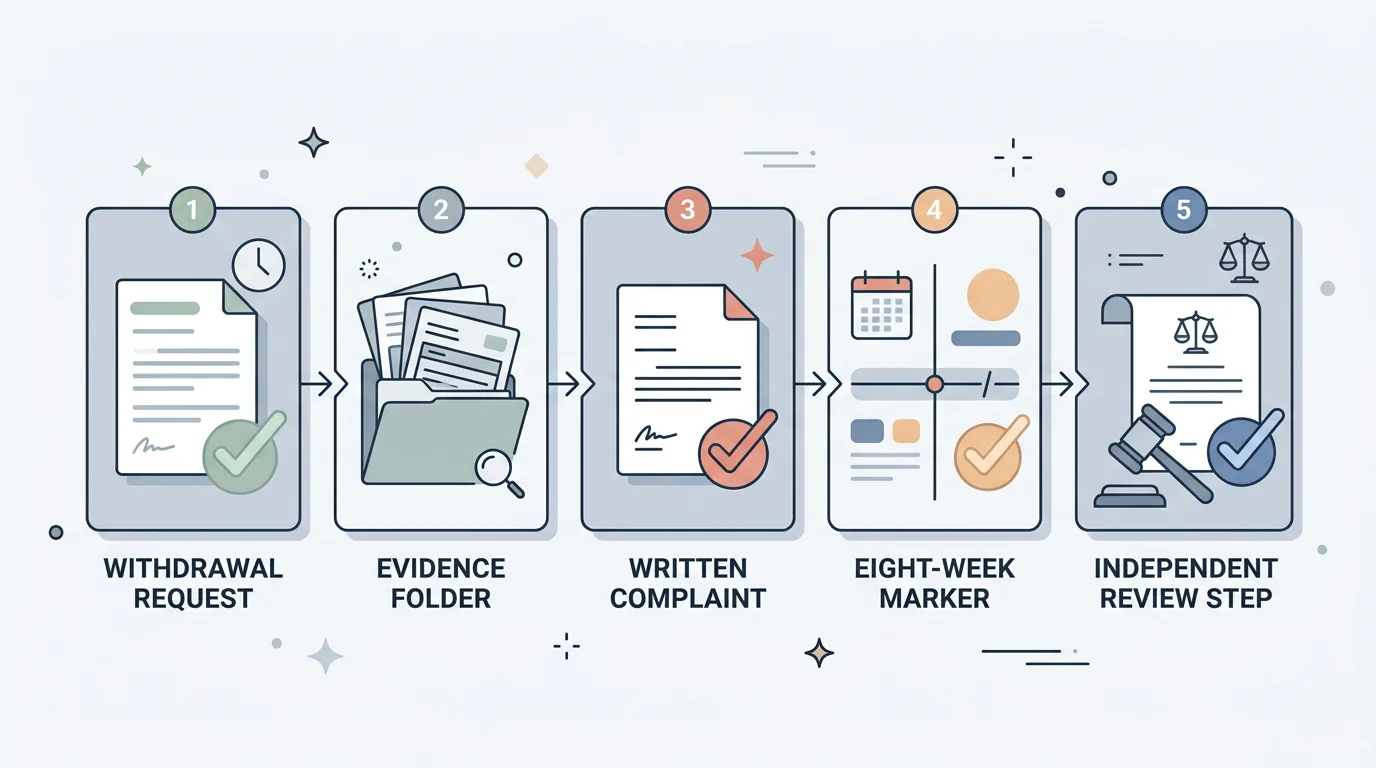
Documenting UK Casino Withdrawal Disputes and ADR Limits
If the complaint involves a withdrawal, blocked account or confusing promotion, begin by protecting your position. Stop adding money while the issue is unresolved. Do not accept a new bonus simply because support has not answered. Do not delete messages, account pages or screenshots. A calm record is more useful than repeated live-chat arguments.
Write down what happened in order. Include the date you deposited, the promotion or term you relied on, the withdrawal request date, the account message you received, and every support reply. If the complaint is about identity checks, note when the request appeared and what the business said it needed. If the complaint is about a bonus, keep the full promotion terms as they appeared when you accepted it, not just a banner or short advert.
Keep the language factual. “My withdrawal request from this date has not been completed” is stronger than a broad claim that every part of the site is unfair. “The bonus page said one thing and the terms page said another” is more useful than a threat. The complaint route works best when the business can identify the account, the transaction, the term and the decision you are challenging.
Know what the official route can and cannot do
The Gambling Commission’s public guidance makes an important boundary clear: it does not resolve or decide individual gambling transaction complaints for customers. That means you should not expect the regulator to order a particular withdrawal to be paid. The normal first route is to complain to the gambling business itself and follow that business’s complaints process.
If the business process does not resolve the issue, Alternative Dispute Resolution can become relevant. The official route points towards ADR after the complaint process has been completed, after a deadlock position is reached, or after eight weeks. This does not mean every complaint will succeed. It means there is a recognised independent route for eligible unresolved disputes after the business-first stage.
That timing matters. Jumping straight to an outside complaint before the business has had a chance to respond can slow things down. Waiting passively without keeping records can also weaken your position. The practical balance is to complain clearly, save every response, track the dates, and be ready to move to the next official step only when the process allows it.
A safe complaint timeline
| Point in the dispute | Useful action | Why it helps |
|---|---|---|
| Problem appears | Stop adding money and take screenshots of account status, balance, withdrawal request, terms and support messages. | It prevents the dispute from becoming mixed with new deposits, new play or a different promotion. |
| Before contacting support | Write a short timeline with dates, amounts, account events and the specific decision you want explained. | A precise complaint is easier to investigate than a general statement that the site is bad. |
| Business complaint | Use the gambling business complaint route and ask for a written response rather than relying only on chat fragments. | The official process expects the business stage to happen first. |
| Waiting period | Track the date you complained, the replies received and whether the business says the matter is at deadlock. | ADR may be relevant only after the business process, deadlock or the eight-week point. |
| Escalation stage | Use ADR only where the official route and the business information make it applicable. | ADR is for unresolved eligible disputes, not a shortcut around unclear facts. |
| Throughout | Avoid threats, public accusations and extra gambling while the dispute is live. | Clear evidence and a stable account record are more useful than emotional escalation. |
Evidence that is usually worth keeping
- Account name or account reference shown inside the logged-in account, without posting it publicly.
- Deposit and withdrawal dates, amounts and payment method labels shown in the account history.
- Promotion terms as they appeared when the offer was accepted, including restrictions and wagering wording.
- Support transcripts, email replies or complaint acknowledgements with dates.
- Messages about age, identity, source of funds or other legal checks.
- Any notice that the account has been restricted, closed, suspended or placed under review.
- A short note of what outcome you are asking the business to explain, such as payment of a withdrawal, removal of an unclear restriction, or a written reason for a decision.
Do not upload personal documents to random channels just because someone in a chat asks for them. If verification is part of the dispute, check that the request comes through the account or another official route explained by the business. For a broader explanation of why gambling accounts may ask for documents, read the guide to age, identity and financial checks.
When the dispute is about ID or withdrawal checks
Withdrawal disputes often become confusing when identity or legal checks appear late in the process. Gambling Commission guidance says online gambling businesses must verify age and identity before a customer can gamble. It also says a business cannot ask for age or identity proof as a condition of withdrawal if it could reasonably have asked for that information earlier. At the same time, information may still be needed at withdrawal stage for other legal obligations, including anti-money-laundering checks.
That distinction is important because it prevents overclaiming. A late document request is not automatically proof that the business must pay immediately, and it is not automatically proof that the customer is wrong. The useful complaint question is narrower: what check is being requested, why is it being requested now, what official route should be used to provide it, and what written explanation will the business give if the withdrawal remains delayed?
If the site advertises “no ID”, “no checks”, or a way to avoid account verification, treat that as a warning sign rather than a convenience. Official material on illegal online gambling has described warning indicators such as unknown or foreign websites, withdrawal difficulty, poor support response, missing safer gambling tools and language around avoiding checks or access blocks. The safer response is not to look for a workaround. It is to avoid further deposits, preserve records and check the licensing position.
What not to put in the complaint
- Do not claim a guaranteed refund. A complaint can ask for a decision to be explained or reviewed, but it cannot safely promise the result.
- Do not threaten a chargeback as a pressure tactic. Payment disputes can have separate consequences and need independent advice if you are unsure.
- Do not accuse a named business of criminal conduct unless you have proper evidence and advice.
- Do not send repeated messages that add no new information. A clear dated record is usually better than twenty angry replies.
- Do not keep gambling on the same account while arguing that the account record is unclear or unfair.
- Do not share identity documents through informal messages or public posts.
If the complaint involves bonus terms
Bonus disputes often start with a small misunderstanding that becomes expensive. The banner may show the exciting part of an offer, while the detailed terms explain wagering rules, game restrictions, maximum bet wording, withdrawal limits or balance separation. If you accepted a promotion, collect both the promotional wording and the full terms. Then ask the business which exact term it says applies and how it has calculated the balance or restriction.
Operators are expected to treat customers fairly, openly and transparently in terms, practices, promotions and withdrawals. Use that as a fairness lens, not as a shortcut to a guaranteed outcome. A fair complaint explains the mismatch: what you saw, what you accepted, what happened, and why the decision appears inconsistent with the terms. For prevention before accepting an offer, use the separate guide to casino bonus terms.
When to check licence status again
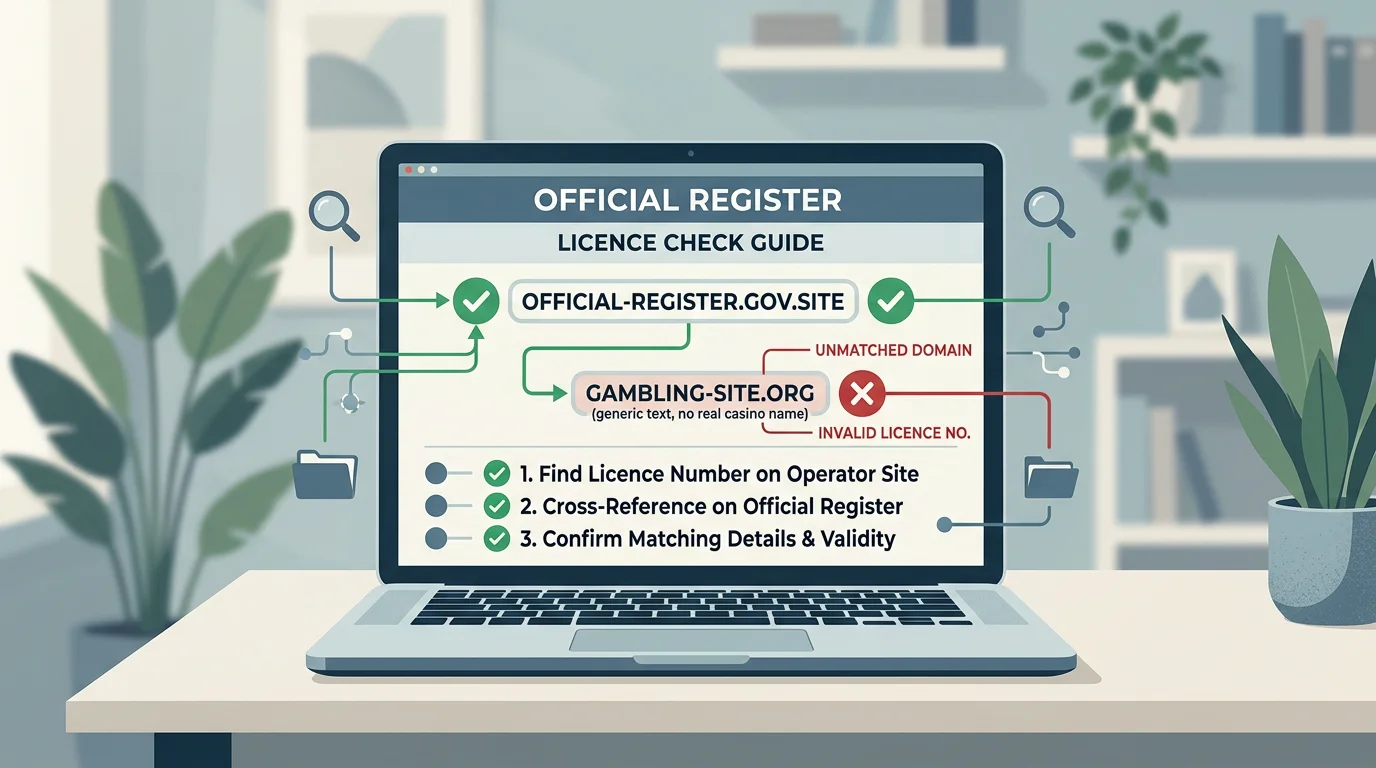
If support does not respond, the site name does not match the business name, the domain feels unfamiliar, or the site gives no clear complaint route, revisit the licence check. In Great Britain, use the public Gambling Commission register as the official starting point for licensed businesses. The separate licence guide explains how to compare the business name, trading name and website information without relying on badges or marketing text.
If the site is not part of the Great Britain licensed route, the complaint path may be harder to understand and the safer decision is still the same: do not deposit more money to unlock a response, do not chase losses, and keep a calm record of what happened. A confusing complaint route is a reason to reduce risk, not a reason to gamble harder.
If stress, debt or chasing losses is part of the problem
A withdrawal dispute can become dangerous when the missing money is needed for rent, bills, debt repayment or another urgent cost. It can also become dangerous when a person keeps gambling because they feel the site “owes” them a win. In that situation, the complaint is not just an account problem. It is a money-pressure and control problem.
Support-first steps are appropriate when gambling is causing distress or when marketing, losses or debt are pushing you to keep playing. Verified support options include GamCare and the National Gambling Helpline, GambleAware tools and service information, NHS guidance on gambling harms, and MoneyHelper debt guidance. You do not need to wait for a complaint outcome before getting support with the pressure around it.
If you find yourself constantly chasing losses or struggling with disputes, it might be time to explore GAMSTOP, self-exclusion and safer next steps.
The practical next step
If you are at the start of a complaint, write the timeline, collect evidence and use the business complaint route. If the business has completed its process, issued a deadlock position, or eight weeks have passed, look at the ADR route that applies to the business and complaint. If the issue is mainly about a delayed withdrawal, read the payments and withdrawal guide. If you are unsure who is behind the site, read the licence-check guide before taking further risks.
Your mental and financial well-being should always come first when using any safe UK gambling safety resource.
Created by the "Casino not on Gamstop" editorial team.