- Check a site on the official register
- Self-exclusion and safer next steps
- Age, ID and financial checks
UK Non GamStop Casino Meaning and License Features
 Available in US
The Exact Meaning of Non GamStop Gambling Sites
GAMSTOP is a national online self-exclusion scheme for people who want to block themselves from online gambling with companies licensed in Great Britain. Its own wording says it covers online gambling companies licensed in Great Britain, and that a chosen exclusion period cannot be cancelled during that period. That matters because “outside GAMSTOP” is not a badge of better service. It usually means the person reading the claim should slow down and ask what protection, licence status and complaint route actually apply.
A gambling site might use “outside GAMSTOP” in several different ways. It might be describing a business that is not licensed by the Gambling Commission. It might be using a foreign licence as its main trust signal. It might be unclear whether the trading name, web address and licence holder match. It might also be marketing directly to people who are self-excluded and looking for a way back into gambling. Those are different situations, but none of them should be treated as proof that a site is safe, legal for a Great Britain consumer, easy to withdraw from, or suitable for someone who has chosen protection.
The safer way to read the phrase is this: it raises questions. It does not answer them. The questions are not only about whether a site can take a deposit. They are about who regulates the business, what happens if there is a dispute, whether withdrawals are handled fairly, whether identity checks are properly explained, whether the business offers safer gambling tools, and whether someone is trying to undo a protection they previously chose for themselves.
Where GAMSTOP and Great Britain licensing meet
For a Great Britain-facing online casino, the key official boundary is the Gambling Commission licence. A remote casino operating licence is needed for online casino facilities provided to consumers in Great Britain, regardless of where the business itself is based. The Gambling Commission also says it is illegal for an operator to provide commercial gambling facilities to consumers in Great Britain without a Commission operating licence or a valid exemption. A foreign licence by itself is therefore not the same thing as permission to provide gambling to consumers in Great Britain.
Relevant remote Gambling Commission licensees must participate in the national multi-operator self-exclusion scheme, subject to listed exceptions in the regulator’s code. In everyday terms, a business that is properly licensed for remote gambling in Great Britain should not be selling itself to ordinary people as a route around GAMSTOP. If a website’s main attraction is that it is “not on GAMSTOP”, “no blocks”, “no checks” or “easy access after exclusion”, the wording deserves extra caution.
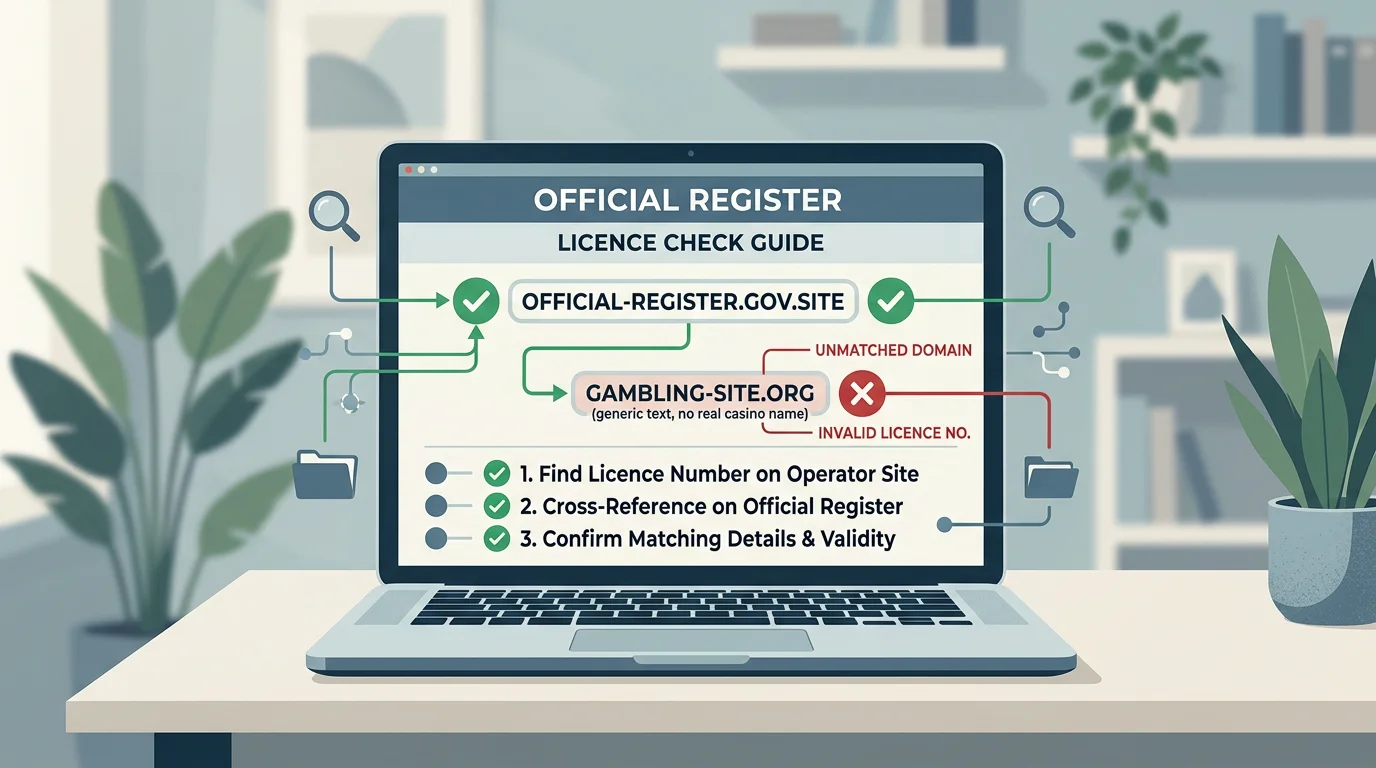
This does not mean every person can reach a legal conclusion just from a slogan. It means the slogan should lead to official checks rather than to a deposit. Licence status, trading names and domains can be checked against official records. The self-exclusion issue should be treated as a protection issue. If someone is self-excluded, the practical next step is support and stronger barriers, not looking for a different door into gambling.
Once you understand the scope of these platforms, it is vital to know how to check an online casino on the Gambling Commission register to verify its legitimacy.
Risk map for common situations
| Situation you see | What it may mean | Safer next action | Why caution is needed |
|---|---|---|---|
| GB licence is clear and the domain appears in official records | The business may be regulated for Great Britain, but the exact activity and domain still need checking. | Check the Gambling Commission business register, licence activity, domain details and any listed regulatory action. | A licence match does not promise fast withdrawals, good terms or suitability for a self-excluded person. |
| The site says it is outside GAMSTOP but gives no clear GB licence information | The business may not be covered by Great Britain licensing or self-exclusion expectations. | Do not rely on the slogan. Look for the licence holder, trading name and domain in official records before depositing. | Unclear licensing can make complaints, player protection and enforcement harder to understand. |
| The site relies on a foreign licence only | A foreign licence may be real, but it is not the same as a Gambling Commission licence for Great Britain consumers. | Check whether the business has a Commission remote casino licence for the relevant activity and domain. | Foreign oversight may not give the same route for a Great Britain complaint or self-exclusion protection. |
| The marketing stresses bypassing blocks, avoiding ID or gambling after self-exclusion | The message is aimed at removing barriers rather than explaining protection. | Step away from the offer and use support, bank blocks or blocking software if the urge to gamble is strong. | The Gambling Commission has discussed motivations and warning signs around illegal online gambling, including self-exclusion circumvention and avoidance of identity checks. |
What the phrase does not prove
It does not prove that a casino is lawful for a Great Britain consumer. It does not prove that withdrawals will be paid quickly. It does not prove that identity checks will be lighter in a safe way. It does not prove that a bonus is fair. It does not prove that complaints will be handled by a body familiar to a Great Britain player. Most importantly, it does not prove that the site is a good choice for someone who has already decided they need distance from gambling.
Some people look at “outside GAMSTOP” because they are frustrated by blocks or checks. That frustration is understandable, but it is also the moment where careful wording matters. The purpose of self-exclusion is to create space between a person and online gambling. Treating that barrier as an inconvenience can turn a protective tool into a cycle of chasing access. If that is the real reason the phrase has caught your attention, the safer action is to strengthen protection and talk to a trusted support service.
A practical way to respond before you act
- Identify the business, not only the brand. Look for the legal business name, trading name and web address. A logo on its own is not enough.
- Check the official register. Use the Gambling Commission public register and business register for Great Britain-facing licence information.
- Match the activity. A remote casino activity is not the same as every other gambling activity. Make sure the licence activity fits what the site offers.
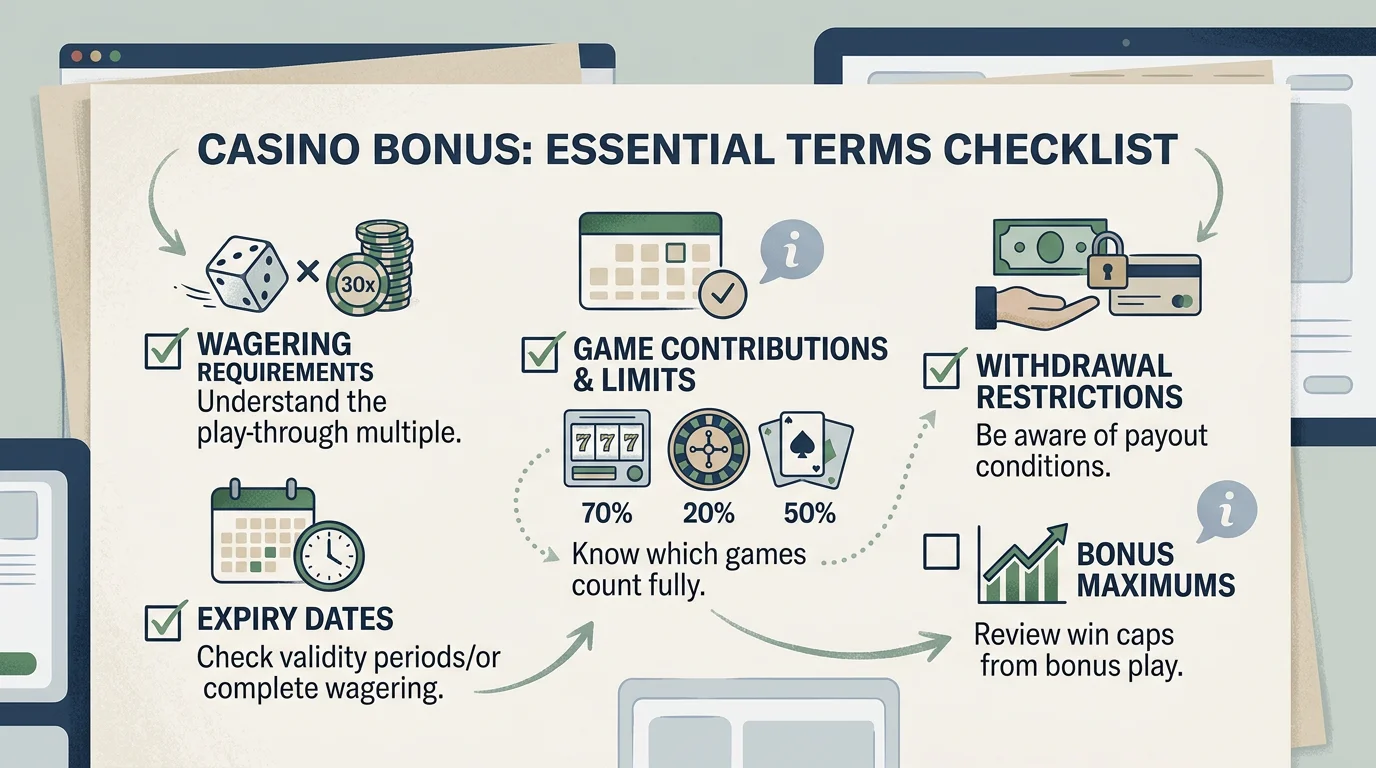
- Read the account terms before depositing. Pay attention to identity checks, withdrawals, bonus restrictions, dormant accounts, complaints and customer funds.
- Pause if the appeal is access after exclusion. If GAMSTOP, bank blocks or other restrictions are part of your situation, use help and extra barriers rather than looking for a workaround.
These steps will not turn a risky site into a safe one, and they do not replace professional advice. They do help separate official information from marketing language. That separation is the most useful starting point when a phrase has been designed to sound attractive but leaves important questions unanswered.
Support-first note for anyone self-excluded
If you are registered with GAMSTOP, the exclusion period is meant to protect you and cannot be cancelled during the chosen period. A site promoted as outside that protection is not solving the reason you chose self-exclusion. It may simply be removing a barrier at the exact point where a barrier is useful.
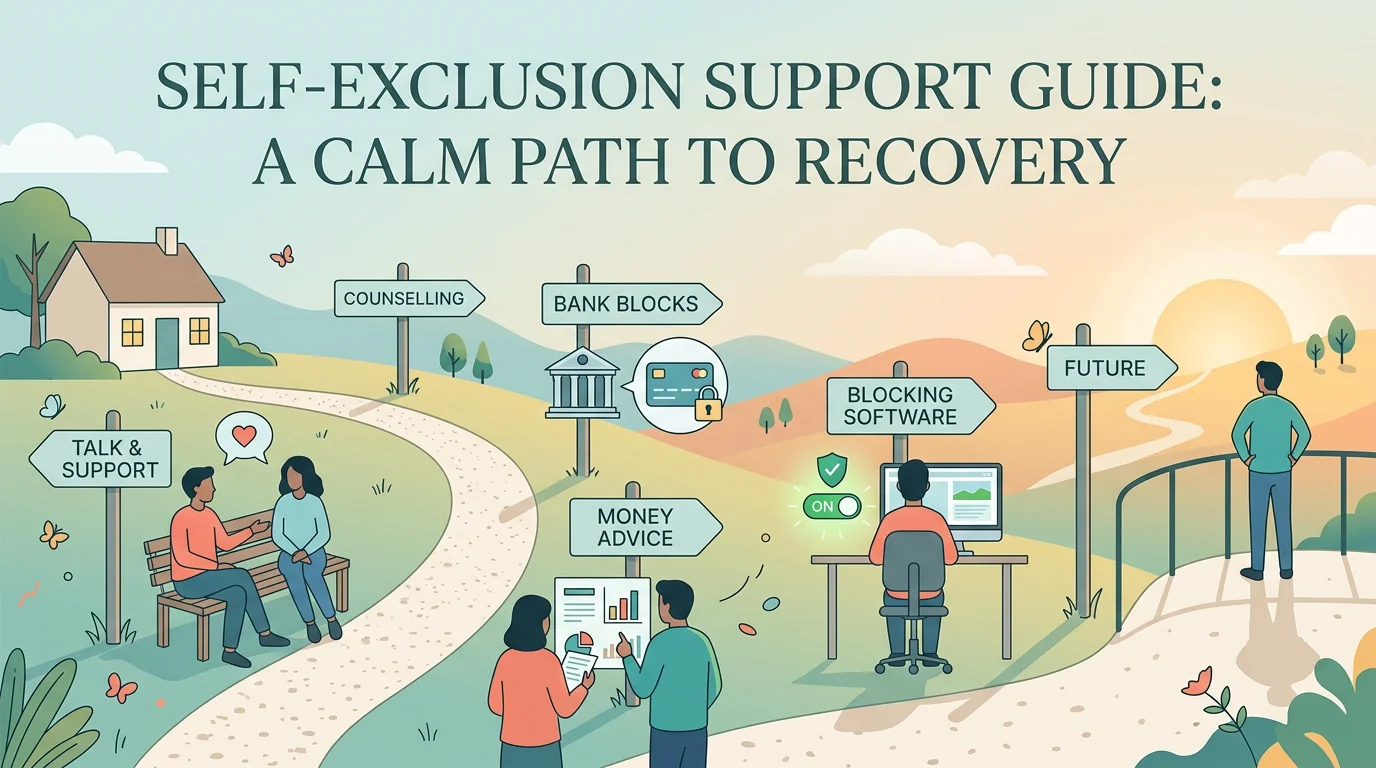
Support does not have to be dramatic or judgmental. It can mean adding a bank gambling block, using blocking software, asking a trusted person to help with account access, speaking to GamCare or another gambling support service, looking at NHS information on gambling harms, or getting debt guidance from MoneyHelper if gambling and money pressure are linked. The aim is not to shame anyone. The aim is to keep the protective decision working when the urge to gamble is loud.
Points to settle before you act
Does “outside GAMSTOP” always mean illegal?
No slogan alone gives a complete legal answer. The safer point is that a Great Britain consumer should check the Gambling Commission register and not rely on a foreign licence, badge or marketing phrase as proof.
Can a GB-licensed remote casino choose not to use GAMSTOP?
Relevant remote licensees are expected to participate in the national multi-operator self-exclusion scheme, subject to listed exceptions. A GB-licensed remote casino should not be treated as a normal “outside GAMSTOP” option for self-excluded players.
What if I only want to compare terms?
Compare terms only after checking the licence boundary. Then look at withdrawals, identity checks, bonus conditions, complaints and customer-fund wording. Avoid any site that presents protection removal as a benefit.
For a complete overview of player safety, always refer to our reliable UK guide to casinos outside GAMSTOP before making any decisions.
Created by the "Casino not on Gamstop" editorial team.