- Age, ID and financial checks
- Check licence information
- Self-exclusion and support
- Complaint and dispute routes
UK Casino Data Security Checks and Account Privacy Rules
 Available in US
Table of Contents
- Data Security Features and Privacy Protection Rules
- Individual rights in plain language
- Marketing choices should be genuine and specific
- Document upload and account-security questions
- Data-safety checklist before or after signup
- When marketing affects gambling control
- If something looks wrong with your data
- What this page cannot verify for you

Data Security Features and Privacy Protection Rules
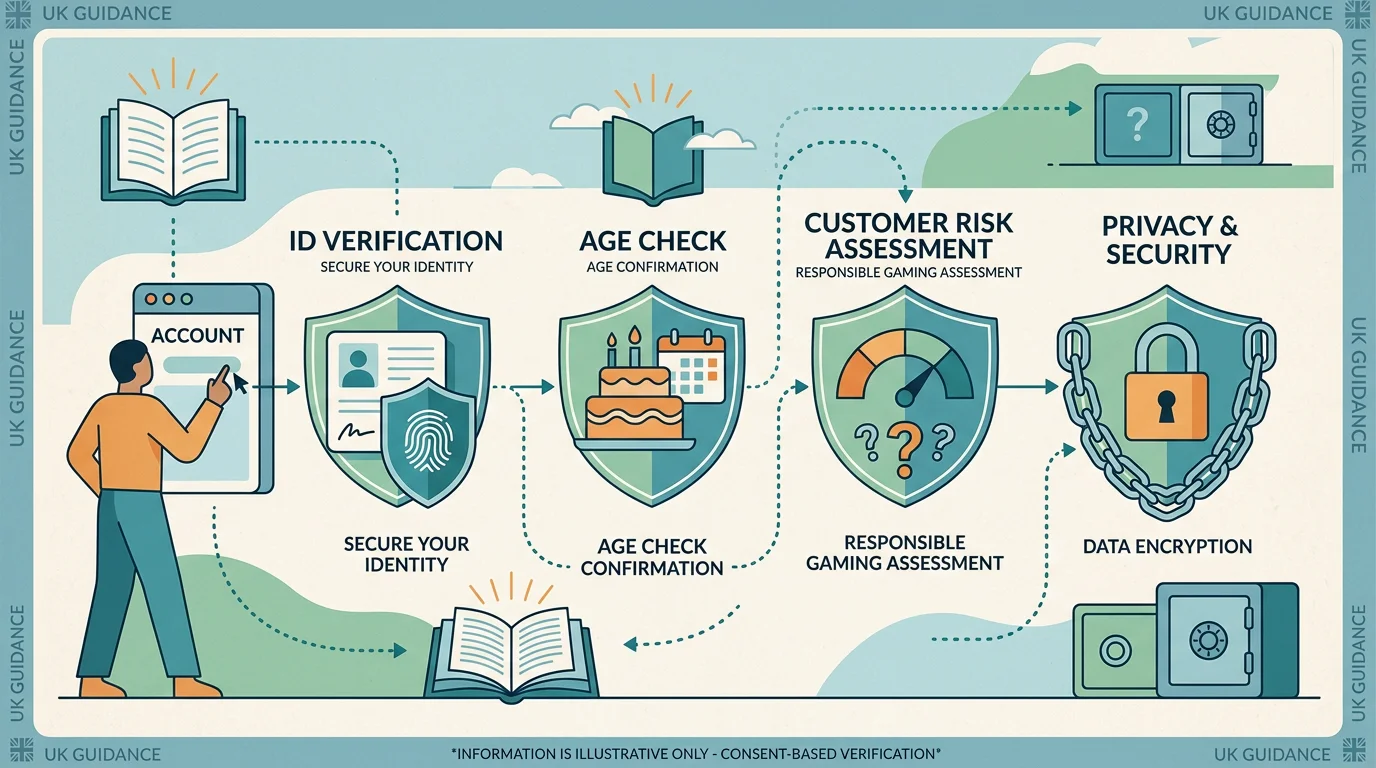
For Great Britain online gambling, age and identity checks are not a minor extra. Gambling Commission public guidance says online gambling businesses must verify age and identity before a customer can gamble. It also explains that identity information may be used for age, identity, self-exclusion and legal checks. That means a serious account opening process may involve more than a username and password.
A site that markets itself around avoiding checks should not be treated as safer or more private. “No ID” language can be attractive when someone wants quick access, but it can also be a sign that the business is outside the protections someone in Great Britain expects. The right question is not “how can I avoid verification?” It is “who is receiving my information, why do they need it, how is the account licensed, and what rights and controls are visible before I upload anything?”
Data risk also includes marketing. Gambling messages can arrive by email, text, phone, app notification or other channels depending on the account and choices offered. If promotions make it harder to control gambling, privacy settings become a safety tool as well as a data tool.
Individual rights in plain language
The Information Commissioner’s Office explains UK GDPR individual rights including the right to be informed, access, rectification, erasure, restriction, data portability, objection, and rights related to automated decision-making and profiling. These rights are not a magic button that deletes every record in every situation. Gambling businesses may have legal reasons to keep certain records. Still, knowing the names of the rights helps you ask clearer questions.
| Right | Plain meaning | Useful gambling-account question |
|---|---|---|
| Be informed | You should be told how personal data is used. | Is the privacy information clear before signup and before document upload? |
| Access | You can ask for personal data held about you. | Can you understand what account, marketing and verification data may exist? |
| Rectification | You can ask for inaccurate data to be corrected. | If a name, address or verification detail is wrong, is there a clear route to correct it? |
| Erasure | You can ask for data to be deleted in certain circumstances. | Does the privacy information explain when deletion may or may not apply? |
| Restriction | You can ask for use of data to be limited in certain circumstances. | Is there a way to raise a concern while a data issue is checked? |
| Portability | You may be able to receive certain data in a portable form. | Does the business explain how account data requests are handled? |
| Objection | You can object to certain uses of data. | Can you object to marketing or profiling that affects your experience? |
| Automated decisions and profiling | You have rights around certain automated decisions and profiling. | Does the site explain automated decisions, risk checks or profiling in understandable language? |
Marketing choices should be genuine and specific
Gambling Commission guidance has flagged concern about direct marketing without genuine consent in gambling contexts. It has also set expectations for remote licensees to provide direct marketing opt-in preferences by product and channel, and not to send marketing contrary to those preferences. In practical terms, you should be able to see meaningful choices rather than one vague box that opens every channel and every product.
Before accepting marketing, slow down and read what the tick boxes actually do. Does one choice cover casino, sports betting, bingo or other products together? Does it cover email, SMS, phone and app notifications together? Is the default easy to misunderstand? Can you change the choice later inside the account? If the account makes opt-out hard, or if offers continue after you have withdrawn consent, keep screenshots and consider using the complaint route.
Marketing controls are especially important if you have self-excluded, taken a break, or noticed that promotional messages trigger gambling urges. The safest response is to turn off marketing and use support tools, not to open a fresh account just to escape a message stream you can no longer manage.
Document upload and account-security questions
Documents can include identity proof, address evidence, payment information or information requested for legal checks. Because those documents are sensitive, do not send them through informal routes just because a support message sounds urgent. Check that the request appears through the account or another official channel explained by the business. If the site is unclear about who runs it, check the licence information before uploading anything.
It is reasonable to ask why a document is needed, what route should be used to upload it, and whether the account shows a written record of the request. It is also reasonable to check basic security habits: a strong unique password, no shared login, no public posting of account screenshots that show personal details, and no reuse of document images across unknown sites unless you understand the risk.
This does not mean every document request is suspicious. Regulated gambling can involve age, identity, self-exclusion and other legal checks. The problem is when a business uses vague privacy wording, hidden ownership, poor account security or “avoid checks” marketing to make normal safeguards feel unnecessary.
Data-safety checklist before or after signup
| Check | What to look for | Reason to pause |
|---|---|---|
| Privacy information | Clear explanation of who uses the data, why it is used and how rights can be exercised. | The privacy link is vague, hidden, copied-looking or impossible to connect to the gambling business. |
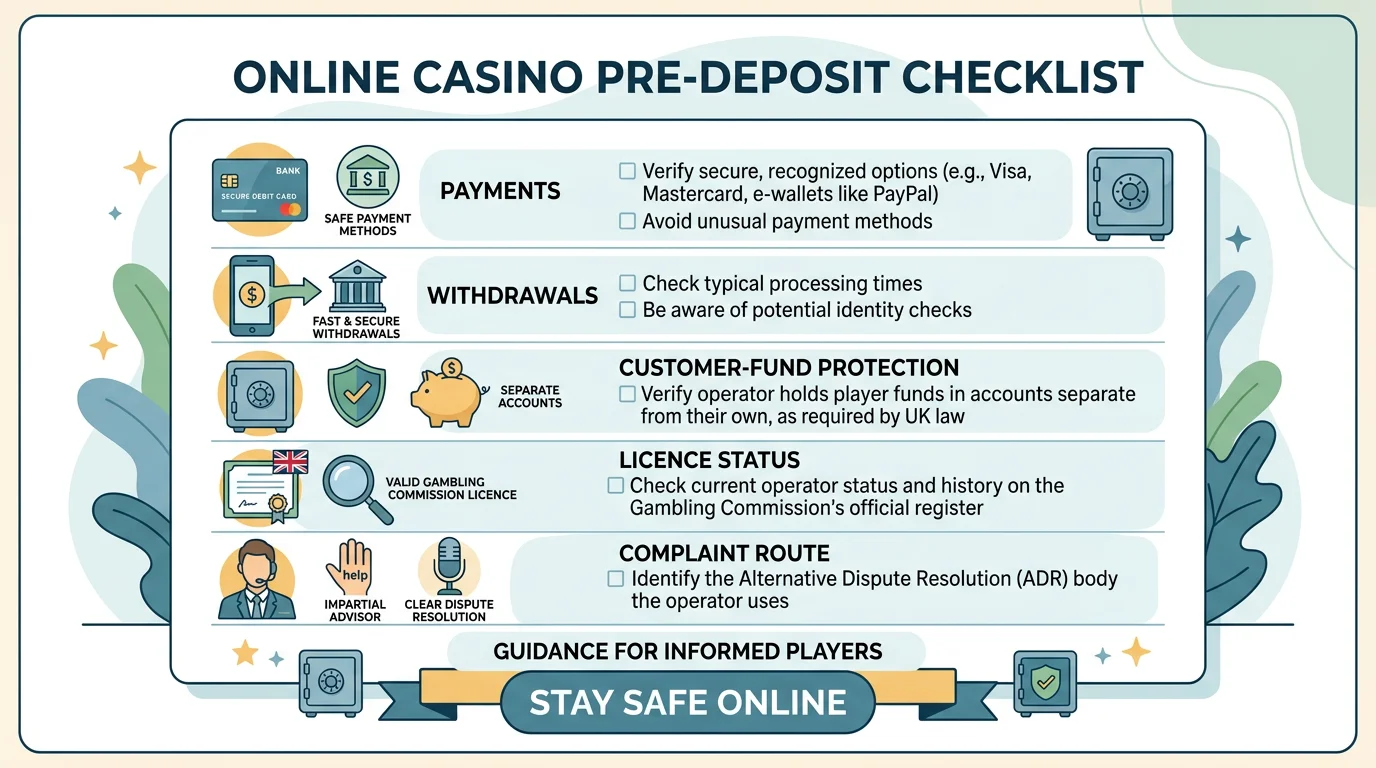
| Licence and identity of business | Business name, trading name and website information that can be compared with the official register. | The site name, company name and domain do not line up clearly. |
| Marketing opt-ins | Separate, understandable choices by product and communication channel. | One broad tick box appears to cover every product and every channel. |
| Document requests | A secure route inside the account or another official route explained by the business. | Support asks for sensitive documents through informal messages or gives no reason for the request. |
| Account security | Unique password, clear account messages and no pressure to share details publicly. | The business asks for unnecessary login details or encourages unsafe sharing. |
| Data-rights route | A plain route for privacy questions, access requests or corrections. | There is no obvious way to raise a privacy concern. |
| Safer gambling impact | Marketing controls that help you reduce triggers and avoid unwanted offers. | Promotions continue after opt-out or make gambling harder to control. |
When marketing affects gambling control
Some people think of privacy settings as an administrative detail. In gambling, they can also affect behaviour. An offer sent at the wrong time can prompt a deposit, restart play after a break, or make losses feel recoverable. If marketing messages are making gambling harder to control, treat that as a safety issue rather than a customer-service irritation.
Use the account’s marketing controls, turn off product and channel preferences where available, and keep a record if messages continue after changes. If the pressure is connected to debt, chasing losses, distress or self-exclusion, use support resources rather than looking for a new account. Verified support context includes GamCare and the National Gambling Helpline, GambleAware tools and service information, NHS guidance on gambling harms, and MoneyHelper debt guidance.
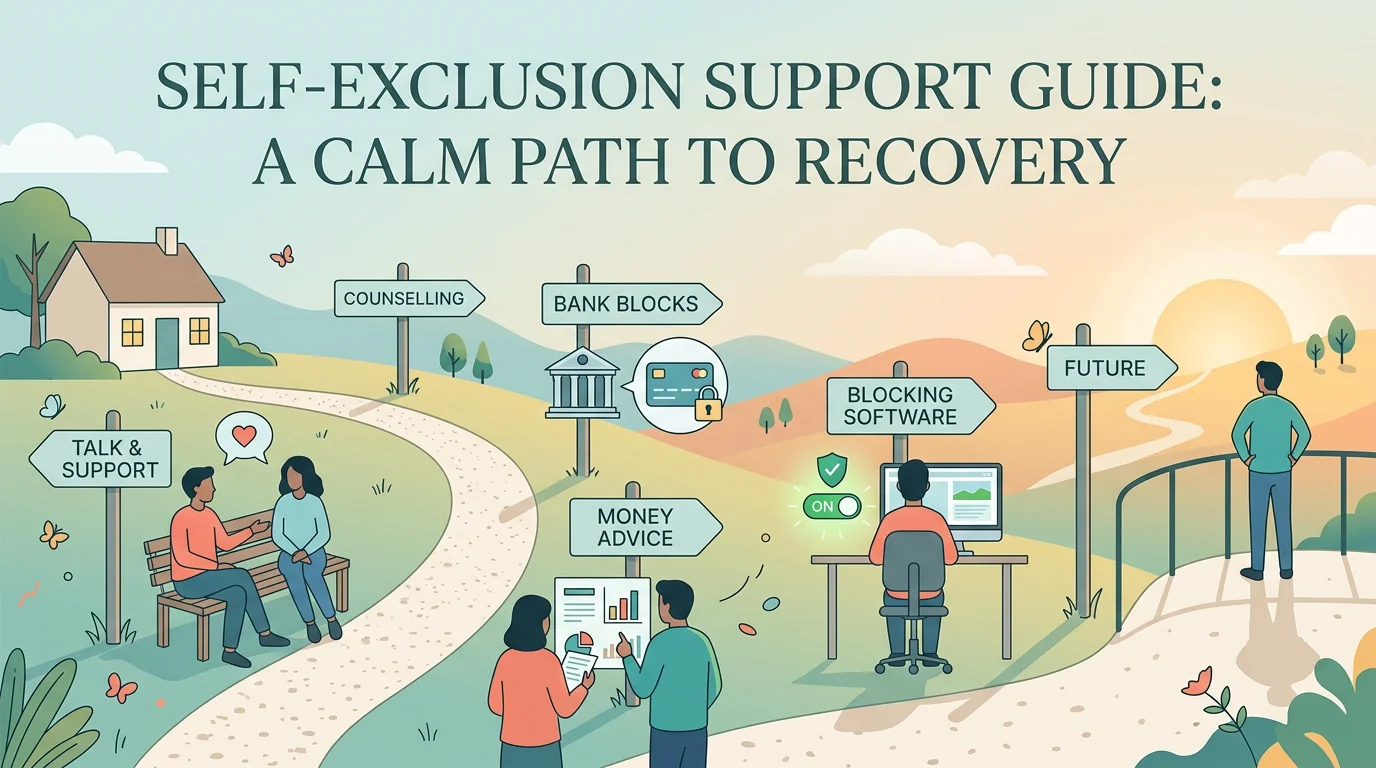
If you are already self-excluded, do not treat marketing from an unfamiliar site as a reason to test whether you can still gamble. Read the self-exclusion and support guide for safer next steps.
If something looks wrong with your data
Data concerns can overlap with account complaints. A withdrawal dispute may involve identity checks. A closed account may involve document handling. Marketing may continue after consent settings were changed. In each case, keep the issue narrow and evidenced. Save the relevant privacy wording, account settings, marketing messages, document requests and dates.
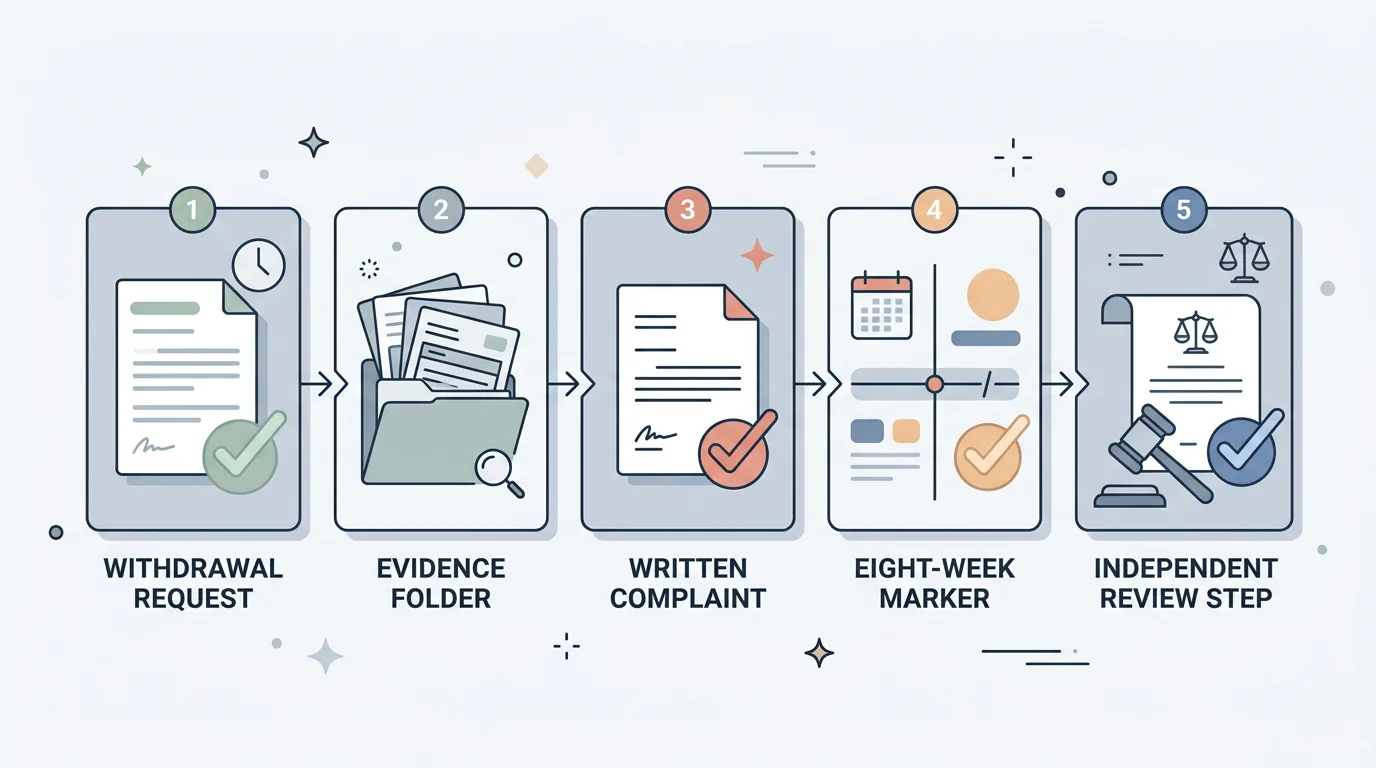
Start with the business route shown in the account or privacy information. Ask for a clear explanation rather than making broad allegations. If the concern is part of a money or account dispute, keep the complaint route separate enough that the business can answer both questions: what happened to the account or balance, and what happened to the data or marketing preference.
For official information about individual rights, use the Information Commissioner’s Office guidance. For gambling transaction complaints, remember that the Gambling Commission does not decide individual customer transaction complaints. The separate complaint and ADR guide explains that route without turning it into a refund promise.
What this page cannot verify for you
This guide cannot confirm that a particular site stores documents safely, uses marketing lawfully, or will handle a rights request correctly. Those claims depend on the exact business, current account process and facts of the case. What the guide can do is help you slow down before sharing sensitive data, recognise vague or unsafe wording, and separate normal regulated checks from claims that make account verification sound optional.
For identity-check details, read the age, ID and financial checks guide. For licence checks, use the licence register guide. If money is already stuck or the account is already in dispute, move to the complaint route rather than sending more personal information through unclear channels.
Created by the "Casino not on Gamstop" editorial team.